Showing posts with label Monsanto. Show all posts
Showing posts with label Monsanto. Show all posts
Sunday, September 13, 2009
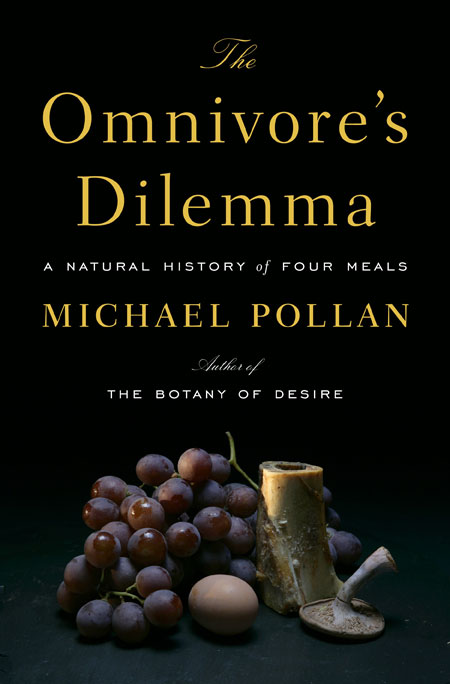
The Book That Ruined My Life!


Monday, September 7, 2009
The Future of Food - Full Length Documentary
THE FUTURE OF FOOD offers an in-depth investigation into the disturbing truth behind the unlabeled, patented, genetically engineered foods that have quietly filled U.S. grocery store shelves for the past decade.
From the prairies of Saskatchewan, Canada to the fields of Oaxaca, Mexico, this film gives a voice to farmers whose lives and livelihoods have been negatively impacted by this new technology. The health implications, government policies and push towards globalization are all part of the reason why many people are alarmed by the introduction of genetically altered crops into our food supply.
Shot on location in the U.S., Canada and Mexico, THE FUTURE OF FOOD examines the complex web of market and political forces that are changing what we eat as huge multinational corporations seek to control the world's food system. The film also explores alternatives to large-scale industrial agriculture, placing organic and sustainable agriculture as real solutions to the farm crisis today.
Sunday, September 6, 2009
Farmer's Market Again...

I'm proud of the fact that I haven't stepped inside a large grocery chain like Safeway for a few months now. Most of my produce has come from the Farmer's Market, and a few things from the Asian supermarket. Also, the farmer's market is much more interesting and exciting than the generic supermarket. The supermarket doesn't have live cooking demonstrations using vegetables and fruits that are in season. You get tastings and recipe ideas for free...

In the documentary Food Inc, Michael Pollan says that you're better off buying at the farmer's market these days since you are face to face with the person who is growing your food. At least you're guaranteed that the food you will be eating is real food.
«Other reasons why you should buy local...»
Source: greenrightnow.com
After declining for more than a century, the number of U.S. small farms has increased 20 percent in the past six years. This is in large part a result of the growing demand for locally grown foods, which is slowly but surely shaping the business of food.
Brenton Johnson, an organic farmer and owner of Johnson’s Backyard Garden, came up with this list of top 10 reasons to buy local food, based on his philosophy to live in harmony with the land.
1. Locally grown food tastes better.
Food grown in your own community is usually picked within the past day or two. It’s crisp, sweet, and loaded with flavor. Produce flown or trucked in is much older. Several studies have shown that the average distance food travels from farm to plate is 1,500 miles.
2. Local produce is better for you.
Fresh [supermarket] produce loses nutrients quickly. Locally grown food, purchased soon after harvest, retains its nutrients.
3. Local food preserves genetic diversity.
In the modern industrial agricultural system, varieties are chosen for their ability to ripen simultaneously and withstand harvesting equipment. Only a handful of varieties of fruits and vegetables meet those rigorous demands, so there is little genetic diversity in the plants grown. Local farms, in contrast, grow a huge number of varieties to provide a long season of harvest, an array of eye-catching colors, and the best flavors.
4. Local food is GMO-free.
Although biotechnology companies have been trying to commercialize genetically modified fruits and vegetables, they are currently licensing them only to large factory-style farms. Local farmers don’t have access to genetically modified seed, and most of them wouldn’t use it even if they could.
5. Local food supports local farm families.
With fewer than 1 million Americans now listing farming as their primary occupation, farmers are a vanishing breed. Local farmers who sell direct to consumers cut out the middle man and get full retail price for their crops.
6. Local food builds a stronger community.
When you buy direct from the farmer, you are re-establishing a time-honored connection between the eater and the grower.
7. Local food preserves open space.
As the value of direct-marketed fruits and vegetables increases, selling farmland for development becomes less likely. The rural landscape will survive only as long as farms are financially viable.
8. Local food helps to keep your taxes in check.
Farms contribute more in taxes than they require in services, whereas suburban development costs more than it generates in taxes.
9. Local food supports a clean environment and benefits wildlife.
A well-managed family farm is a place where the resources of fertile soil and clean water are valued. Good stewards of the land grow cover crops to prevent erosion and replace nutrients used by their crops. Cover crops also capture carbon emissions and help combat global warming.
10. Local food is about the future.
By supporting local farmers today, you can help ensure that there will be farms in your community tomorrow, so that future generations will have access to nourishing, flavorful, and abundant food.
Subscribe to:
Posts (Atom)

 Posts
Posts


